|
|
Dennis
Fisher
Spiritual SuperstarsSuperstars
abound in today’s culture. Great
soccer players can create such excitement that fans have been known to
riot in the bleachers. Popular
musicians have fans who stand with adoration throughout entire
concerts. And Hollywood celebrities hire bodyguards to protect themselves from adoring stalkers.
The
first-century Corinthian believers had become divided over their own “spiritual superstars.” Paul
viewed such favoritism as a reflection of the sinful nature in a
believer’s unyielded heart. “For when one says, ‘I am of Paul,’
and another, ‘I am of Apollos,’
are you not carnal?” he asked (1 Cor. 3:4.
|
||||
| Read: 1
Cor. 3:1-15 |
(
1- Corinthians 3 -Audio-)
|
||||
When one says, “I am of Paul,” and another, “I am of Apollos,” are you not carnal? —1 Cor. 3:4 |
The apostle’s teaching on how we view Christian leaders puts the topic in a biblical perspective that provides mutual appreciation for those who minister: “I planted, Apollos watered, but God gave the increase” (v.6). Each person did his part: Paul had planted spiritual seed through evangelism, and Apollos had watered it with his eloquent Bible teaching. But it was God alone who made the seed of spiritual life grow. He
alone is the “superstar.”
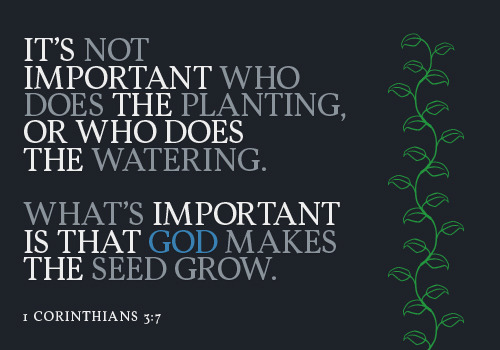 We should be careful not to
put any Christian leader on a pedestal.
Instead, let’s appreciate how God is using a variety of spiritual leaders for His honor and His glory.  Lord, give us wisdom. We know it’s good to follow the example of our godly leaders, but help us not to think so highly of them that we worship them instead of You. Amen. - - - - - - - Each person has his place in God’s service, and only God deserves the glory. |
||||
| Bible
in a Year: 1 Samuel 4-6; Luke 9:1-17 |
"Reflexions from Our Daily Bread"
Posted by: Ben Ayala : benayalal@gmail.com
 Thanks to the Sources at: rbc[dot]org -and- odb[dot]org  Follow Pastor Tony at: Follow Pastor Tony at: |
||||


El Libro a los Hebreos Propósito: Alertar, edificar y fortalecer a la iglesia (pastores, servidores, miembros e invitados) para permanecer firmes en la fe frente a las corrientes de estos postreros tiempos. INTRODUCCIÓN Amada iglesia, hermanos, servidores, pastores y amigos que nos visitan hoy: sean todos muy bienvenidos a la casa del Señor. Cuando uno viaja por una carretera sinuosa en la montaña, nota que a la orilla de los abismos hay unas estructuras fijas: las barandas de seguridad. La función de esas barandas no es arruinar el viaje ni quitar el paisaje; están ahí para salvarnos la vida si perdemos el control o nos desviamos del camino. En la carta a los Hebreos, el Espíritu Santo colocó cinco "barandas espirituales". El autor no escribió estas advertencias para destruir nuestra paz ni para infundir un temor servil, sino para proteger a la iglesia del mayor peligro espiritual: la apostasía. La apostasía rara vez ocurre de la noche a la mañana. Comienza como un enfriamie...
Comentarios
Publicar un comentario